
News Summary
As 2025 approaches, home golf simulators are gaining popularity with enthusiasts who want year-round access to golf. This article explores the benefits, market growth, and essential considerations for potential buyers. Factors such as space requirements, equipment costs, and the latest technology trends are discussed to help consumers make informed decisions about their investments in home golf setups.
Nationwide — Investing in a Home Golf Simulator: What You Need to Know in Late 2025
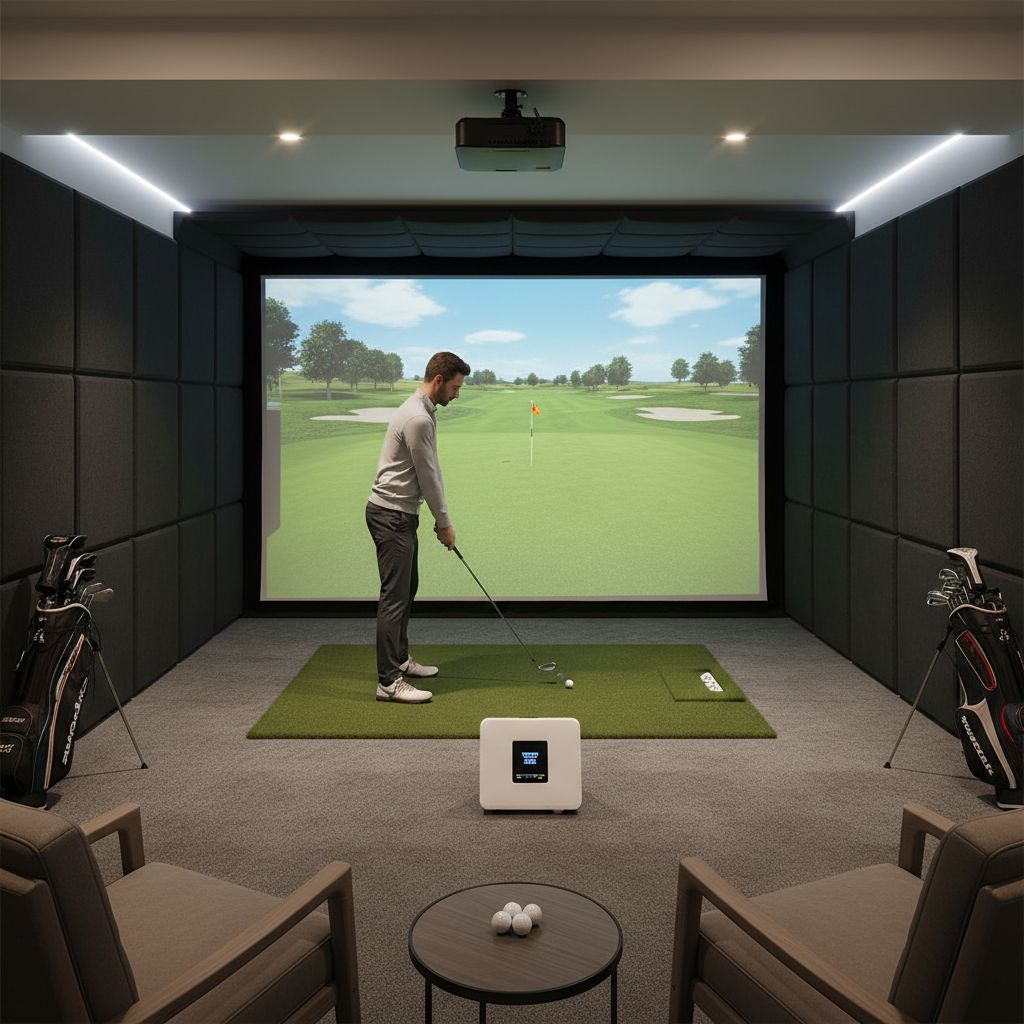
As the year 2025 draws to a close, the allure of year-round golf continues to drive significant interest in home golf simulators across the nation. For enthusiasts looking to refine their game, enjoy social gatherings, or simply escape unpredictable weather, acquiring a personal golf simulator is becoming an increasingly popular and attainable aspiration. However, making an informed purchase requires careful consideration of several key factors, from available space and budget to the specific technological components involved. The market is evolving rapidly, offering a diverse range of options that cater to various needs and financial capacities.
Understanding the Benefits and Market Growth
The global golf simulator market is experiencing robust growth, projected to expand significantly by 2030, driven by consumer desires for year-round accessibility and home-based leisure. Home golf simulators offer numerous advantages, including the ability to practice and play regardless of weather conditions, providing detailed analytics for game improvement, and serving as a unique source of entertainment. They can also save golfers time and money by reducing travel to courses and eliminating greens fees. Furthermore, a well-designed simulator room can enhance a home’s value, making it a strategic investment for homeowners.
Key Considerations for Your Home Setup
Before purchasing a home golf simulator, prospective buyers must evaluate several critical aspects to ensure the system meets their expectations and fits their environment. These include the physical space available, the overall budget, the specific equipment components, and whether to opt for a do-it-yourself (DIY) or professional installation.
Space Requirements are Paramount
One of the primary considerations is the amount of space dedicated to the simulator. An ideal setup allows for a full, unrestricted golf swing with all clubs. Minimum recommendations for a comfortable home setup typically include a ceiling height of at least 8.5 to 9 feet, though 10 feet or more is highly recommended for full swing clearance, especially when using a driver. For room width, a minimum of 10 feet is suggested, but 12 to 15 feet is often advised, with 14 to 15 feet or more being ideal to comfortably accommodate both right-handed and left-handed golfers. The depth of the room is equally crucial, with recommendations ranging from 12 to 15 feet minimum, and an optimal range of 16 to 20 feet. This depth accounts for the distance from the tee to the impact screen, adequate swing space behind the hitting area, and a buffer zone behind the screen.
Budgeting for Components and Installation
The cost of a home golf simulator can vary significantly, ranging from approximately $2,000 for basic setups to over $20,000 for high-end systems, and even up to $150,000 for luxury installations. A basic setup, including a net, hitting mat, and an entry-level launch monitor, might fall between $2,000 and $5,000. Mid-range systems, which often incorporate an impact screen, projector, and simulator software, typically cost between $5,000 and $12,000. For those seeking advanced tracking, premium enclosures, and full-course play, high-end systems can range from $15,000 to $25,000 or more.
Key components contributing to the overall cost include the launch monitor, impact screen or enclosure, projector, hitting mat, and simulator software. While some opt for DIY installations to manage costs, professional installation may be advisable for complex systems or to ensure optimal setup and calibration.
Core Technology: Launch Monitors and Projectors
The launch monitor is considered the most important piece of equipment, tracking ball and swing data with varying levels of accuracy and data points. These devices are generally categorized as either camera-based or radar-based. Popular brands include Rapsodo MLM2PRO, Garmin R10, SkyTrak+, Foresight GC3/GCQuad, FlightScope Mevo+, Uneekor (EYE XO2, EYE MINI, QED), Bushnell Launch Pro, Full Swing KIT, and Trackman. These monitors provide crucial feedback such as ball speed, launch angle, and spin rate, which are vital for game improvement.
For projecting the virtual course, a short-throw projector is often recommended to maximize space and avoid shadows. These typically require at least 1080p resolution and a brightness of 3,000 lumens or more for a clear image, especially in rooms with ambient light.
Software and Other Essentials
Golf simulator software is fundamental for a realistic and engaging experience, offering graphics, accurate ball flight physics, various course options, practice ranges, and sometimes multiplayer or challenge modes. Popular choices like E6 Connect, TGC 2019, and GSPro often come with subscription models that provide access to hundreds of courses and advanced practice features.
Other essential components include a durable impact screen or enclosure, which should be made of heavy-duty material like polyester mesh and provide good image quality. A quality hitting mat is also vital for comfort and realistic feel during play. Additionally, considerations for wall and ceiling protection, a reliable computer or tablet to run the software, and appropriate lighting are part of a complete setup.
Evolving Trends in 2025
The golf simulator landscape in 2025 is marked by exciting innovations. Trends include the integration of AI-powered analytics, which offers real-time feedback and customized training plans to enhance skill development. There’s also a growing demand for compact designs, featuring foldable frames, wall-mounted screens, and portable units, ideal for smaller urban homes. Many modern systems are incorporating multi-sport functionality, transforming simulators into versatile entertainment hubs for various activities beyond golf. Enhanced connectivity through cloud technology allows users to track progress and compete globally. Advances in visual technology, such as 4K and laser projectors, and soundproofing for an immersive atmosphere, are further refining the indoor golf experience.
The Indoor Golf Shop, for instance, is a leading supplier of soft goods like screens, hitting surfaces, and enclosures, offering various packages tailored to different sizes and budgets. Rene Delgado, the founder and CEO of The Indoor Golf Shop, has been instrumental in monitoring the evolution of these systems.
Making the Right Decision
With the continued growth of indoor golf, selecting the right home golf simulator involves a thoughtful assessment of personal needs, space constraints, and budget. The latest advancements in technology, particularly in launch monitors and software, provide unprecedented accuracy and realism, making it easier than ever to bring the full golf experience indoors. As options become more diverse and accessible, golfers can look forward to maintaining and improving their game year-round.
Frequently Asked Questions (FAQ)
- What are the primary benefits of owning a home golf simulator?
- A home golf simulator offers numerous benefits, including the ability to play and practice golf year-round regardless of weather conditions, detailed analytics for game improvement, convenience, entertainment, and the potential to save time and money on travel and greens fees.
- What are the typical space requirements for a home golf simulator?
- For a comfortable home golf simulator setup, a minimum ceiling height of 8.5 to 9 feet is recommended, with 10 feet or more being ideal. The room width should be at least 10 feet, ideally 12 to 15 feet, and the depth should range from a minimum of 12-15 feet to an optimal 16-20 feet.
- How much does a home golf simulator cost?
- The cost of a home golf simulator can range widely. Basic setups typically cost between $2,000 and $5,000. Mid-range systems are usually priced from $5,000 to $12,000, while high-end or luxury systems can range from $15,000 to over $20,000, with some premium installations reaching up to $150,000.
- What are the essential components of a home golf simulator?
- The essential components include a launch monitor (to track ball and swing data), an impact screen or enclosure (to stop the ball and display visuals), a projector (to display the virtual course), a hitting mat (for a realistic hitting surface), and golf simulator software (for graphics, courses, and practice modes).
- What are the latest trends in golf simulator technology for 2025?
- Latest trends for 2025 include AI-powered analytics for personalized feedback, compact designs suitable for smaller spaces, multi-sport functionality, enhanced connectivity, and advancements in visual technology such as 4K and laser projectors for a more immersive experience.
Key Features to Consider for a Home Golf Simulator
| Feature Category | Key Considerations | Details/Examples |
|---|---|---|
| Space Requirements | Ceiling Height | Minimum 8.5-9 ft, ideal 10+ ft for full swings. |
| Room Width | Minimum 10 ft, ideal 12-15 ft (14-15+ ft for both left/right-handed players). | |
| Room Depth | Minimum 12-15 ft, ideal 16-20 ft (includes tee-to-screen, swing space, screen buffer). | |
| Budget & Cost | Basic Setup | $2,000 – $5,000 (net, mat, entry-level launch monitor). |
| Mid-Range System | $5,000 – $12,000 (impact screen, projector, software). | |
| High-End/Luxury System | $15,000 – $25,000+ (advanced tracking, premium enclosure, full-course play, up to $150,000 for luxury). | |
| Core Components | Launch Monitor | Most important, camera-based or radar-based, tracks ball/swing data (e.g., Rapsodo, SkyTrak, Foresight, FlightScope). |
| Projector | Short-throw recommended, 1080p resolution minimum, 3,000+ lumens brightness. | |
| Impact Screen/Enclosure | Durable polyester mesh, good image quality, protects walls. | |
| Hitting Mat | Quality material for comfort and realistic feel. | |
| Software | Realistic graphics, ball flight, course options, practice modes (e.g., E6 Connect, TGC 2019, GSPro). | |
| Installation | DIY vs. Professional | Consider complexity, budget, and desired finish. |
| Current Trends (2025) | Technological Advancements | AI-powered analytics, multi-sport functionality, 4K/laser projectors, enhanced connectivity. |
| Design Innovation | Compact designs (foldable frames, wall-mounted screens, portable units). |
Deeper Dive: News & Info About This Topic
Students Enjoy Golf Simulator at Unified Bank Jr. Rec Center
Students Enjoy Indoor Golf on Snow Day at Rec Center
Golf Simulators Transform Home Play Experience
Best Golf Simulators for Indoor Use in 2024
The Best Golf Mats for Indoor Simulators and Practice
Golf Simulators for Garages: Space and Setup Tips
Golf Simulators for Home: A Buyer’s Guide
Top Factors to Consider When Buying Golf Simulators
Are Golf Simulators Getting Cheaper Over Time?
Comparing Golf Simulators: Which Model Is Best?
