
News Summary
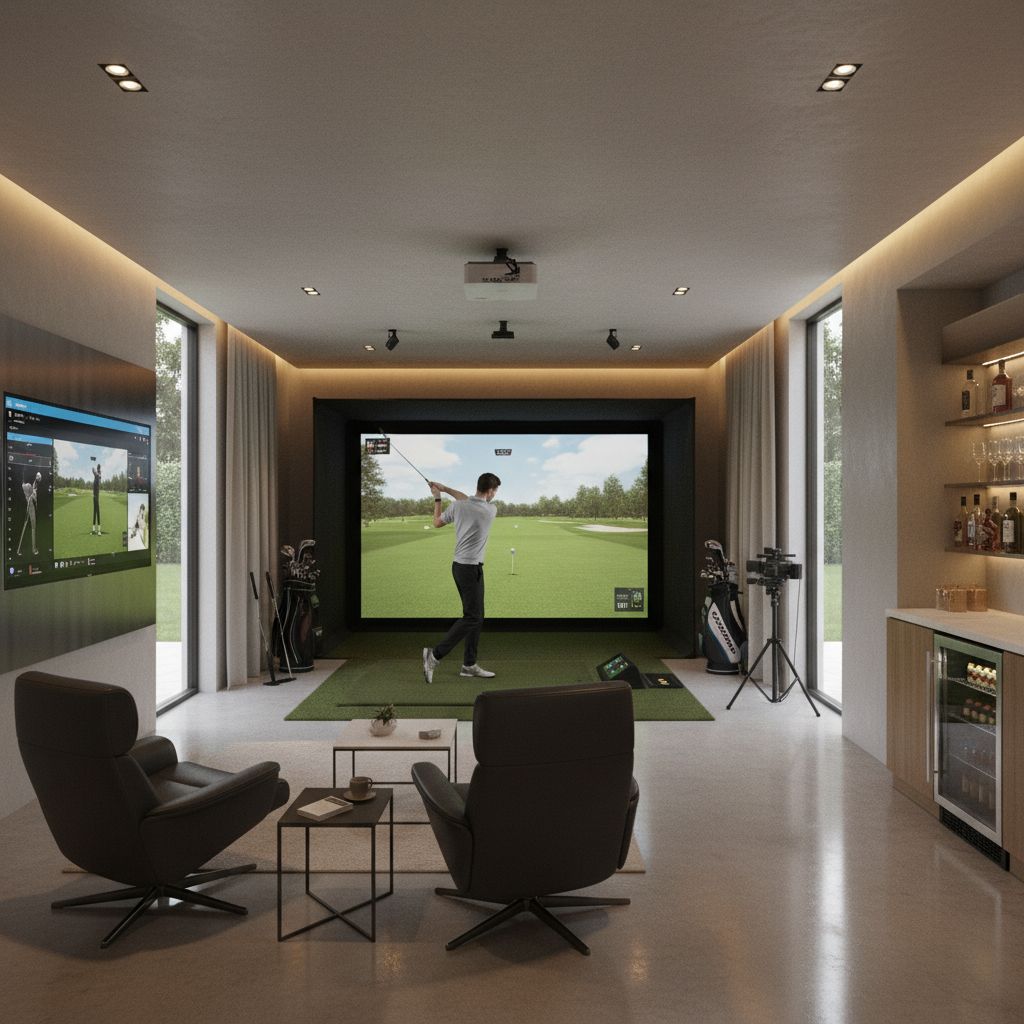
The growing trend of home golf simulators is reshaping how golf enthusiasts engage with the sport. With desires for year-round play and improved game performance, more players are investing in these systems. The market is predicted to reach $1,500 million by 2025, showcasing significant interest driven by space requirements, budgeting needs, and advancements in technology that enhance the at-home golfing experience.
Nationwide
The allure of bringing the golf course home is stronger than ever, as golf enthusiasts increasingly consider purchasing home golf simulators. This growing trend is driven by a desire for year-round play, enhanced game improvement, and versatile entertainment options, regardless of external weather conditions or time constraints. The global golf simulator for home market is experiencing robust expansion, projected to reach an estimated $1,500 million in 2025 with an anticipated Compound Annual Growth Rate (CAGR) of 18% over the forecast period of 2025-2033. Professionals continue to monitor the evolution of this technology, highlighting key considerations for potential buyers.
Understanding Your Needs: Space, Budget, and Technology
Before investing in a home golf simulator, careful consideration of available space, budget, and the desired technological features is essential to create an optimal indoor golfing environment.
Space Requirements Are Paramount
A critical factor in setting up a home golf simulator is ensuring adequate space for comfortable and safe swings. Most recommendations suggest a minimum ceiling height of 9 feet for full swing clearance, with 10 feet or more being ideal, especially for taller players or those using longer clubs like drivers. The width of the space is also crucial, with a recommended minimum of 10 feet to 12 feet for comfortable swings without striking walls. To accommodate both right and left-handed golfers by positioning the hitting area centrally, a wider space of at least 14 feet is often recommended.
For depth, an ideal setup typically requires 15 to 20 feet. This depth allows for the impact screen to be positioned 12 to 16 inches from the rear wall, the tee to be placed 10 to 12 feet from the screen, and approximately 7 feet of swing space behind the tee. Common locations for home golf simulators include garages, basements, and dedicated game rooms. It is also important to account for projector throw distance and buffer space behind the screen to ensure a clear image and safety. Some simulator packages are designed to fit into more compact spaces, offering flexibility for various home environments.
Budgeting for Your Dream Setup
The cost of a home golf simulator can vary significantly, depending on the quality and features desired. Entry-level simulators, which might include a basic launch monitor, hitting mat, and net, can range from $2,000 to $10,000. Mid-range systems, often incorporating a quality impact screen, projector, and enhanced software, typically fall between $5,000 and $20,000. For a high-end, custom-installed setup with advanced tracking technology, premium enclosures, and full-course play, prices can range from $15,000 to over $35,000.
The overall cost includes various components such as the launch monitor, impact screen or enclosure, projector, hitting mat, and compatible software. Beyond the initial purchase, potential buyers should also consider ongoing expenses. These can include annual software subscriptions, which often provide access to a wider array of virtual courses, practice ranges, and detailed analytics. Additionally, components like impact screens and hitting mats have a lifespan and may require replacement every few years, adding to the long-term cost.
Navigating Technology and Features
Modern golf simulators leverage advanced technology to deliver realistic and immersive experiences. Key components include launch monitors, which utilize various technologies to track ball and club data. Camera-based systems, such as Foresight Sports GC3 or Uneekor, typically use high-speed cameras to provide precise data on launch angle, ball speed, spin rate, and club path, often performing reliably indoors. Radar-based systems, like FlightScope Mevo+ or Trackman, use radar technology and may offer more flexibility for indoor and outdoor use, often tracking a wider range of data points. Photometric systems offer a balance between price and precision.
The simulation software is crucial, offering realistic graphics and physics that account for factors like wind, slope, and spin. Many simulators come with extensive libraries of world-famous courses, practice drills, and analytical tools to help golfers refine their skills. Advanced analytics provide instant feedback on metrics such as ball speed, launch angle, spin rate, and swing path, aiding in game improvement. Emerging trends in 2025 include AI-powered analytics for personalized feedback, multi-sport functionality to cater to diverse entertainment needs, and enhanced connectivity for online competitions and data storage.
The Evolving Home Golf Simulator Market
The home golf simulator market is experiencing rapid growth, driven by several factors. The increasing adoption of smart home technology, a rising interest in golf as both a recreational and fitness activity, and continuous advancements in simulation technology are all contributing to more realistic and immersive experiences. The convenience of practicing golf from home, independent of weather conditions, remains a significant draw.
The market is also seeing a push towards more compact and portable designs, including foldable frames and wall-mounted screens, making home simulators accessible even in smaller living spaces. Beyond individual practice, home golf simulators offer significant entertainment value, allowing for social gatherings, friendly competitions with friends and family, and even serving as home theater systems. This versatility, combined with the ability to provide consistent practice and detailed performance analysis, solidifies home golf simulators as a valuable investment for many golf enthusiasts.
Frequently Asked Questions (FAQ) About Home Golf Simulators
- What is the main benefit of owning a home golf simulator?
- The main benefit is the ability to play golf all year round, regardless of weather conditions, offering convenience for practice and entertainment.
- How much space is typically required for a home golf simulator?
- Generally, a minimum ceiling height of 9 feet is recommended, with 10 feet or more being ideal. A width of 10 to 12 feet is needed, and a depth of 15 to 20 feet is typically recommended.
- What is the expected cost range for a home golf simulator?
- Costs can vary significantly: entry-level setups might range from $2,000 to $10,000, mid-range systems from $5,000 to $20,000, and high-end custom installations from $15,000 to over $35,000.
- What are the key technological components of a golf simulator?
- Key components include a launch monitor (using camera, radar, or photometric technology), an impact screen or enclosure, a projector, a hitting mat, and compatible simulation software.
- Can home golf simulators help improve my golf game?
- Yes, home golf simulators provide instant feedback on shots, including ball speed, launch angle, and spin rate, which helps identify areas for improvement and allows for consistent practice in a controlled environment.
Key Features of Home Golf Simulators
| Feature Category | Description | Key Considerations |
|---|---|---|
| Space Requirements | Physical dimensions needed for installation and comfortable play. | Minimum 9-10 ft height, 10-14 ft width, 15-20 ft depth. Accommodate right/left-handed golfers. |
| Budget & Cost | Initial purchase price and ongoing expenses for the simulator system. | Entry-level: $2,000-$10,000; Mid-range: $5,000-$20,000; High-end: $15,000-$35,000+. Includes hardware, software, and potential subscriptions/replacements. |
| Launch Monitor Technology | Devices that track ball and club data for simulation. | Camera-based (e.g., Foresight, Uneekor), Radar-based (e.g., Trackman, Mevo+), Photometric. Affects accuracy, space needs, and indoor/outdoor flexibility. |
| Simulation Software | Programs that run the virtual golf experience. | Realistic graphics, physics, course variety, practice modes, advanced analytics, multiplayer options, and subscription models. |
| Impact Screen / Enclosure | Physical barrier to catch golf balls and display the projection. | Durability, size, material quality, and safety. Can be a net, hanging screen, or full enclosure. |
| Projector & Display | Equipment to project virtual courses onto the impact screen. | Resolution, brightness (lumens), aspect ratio, and throw distance for clear and immersive visuals. |
| Data & Analytics | Information provided on each shot for game improvement. | Ball speed, launch angle, spin rate, carry distance, club path, face angle, and shot dispersion. |
| Entertainment & Social Features | Options for fun and interaction beyond individual practice. | Access to world-famous courses, mini-games, challenges, online competitions, and multiplayer modes. |
| Emerging Trends (2025) | New developments shaping the future of home simulators. | AI-powered analytics, multi-sport functionality, compact and portable designs, and enhanced connectivity. |
Deeper Dive: News & Info About This Topic
Best Golf Simulators for Indoor Use in 2024
Revolutionize Your Golf Game with Rapsodo MLM2PRO™
Indoor Golf Shop Launches Black Friday Savings
Major Black Friday 2025 Golf Discounts on Equipment and Apparel
6ix Iron Expands Indoor Golf Experience in Yorkville
The Best Golf Mats for Indoor Simulators and Practice
Golf Forums Buzzing Over 9-Wood Performance Challenges
Golf Simulators for Garages: Space and Setup Tips
New Equipment Editor Joins GolfMagic
Golf Simulators for Home: A Buyer’s Guide
