
News Summary
The early 2026 PGA Tour season marks significant victories for the TaylorMade Spider Tour X putter, showcasing traditional design’s resurgence against the zero-torque trend. Notable players like Chris Gotterup, Scottie Scheffler, and Collin Morikawa have achieved victories using this mallet style putter. While zero-torque technology grows in popularity, the success of the Spider Tour X emphasizes the ongoing preference for classic performance and feel. This underscores the diverse equipment choices professional golfers make based on personal comfort and effectiveness.
The early part of the 2026 PGA Tour season has revealed a compelling narrative in golf equipment: the resurgence and dominance of a specific putter model that stands in contrast to the growing “zero-torque” trend. While manufacturers continue to champion putters designed to minimize face rotation, a more traditional mallet design has claimed multiple victories across the nation, signaling a nuanced landscape in professional putting preferences.
TaylorMade Spider Tour X Leads Early 2026 PGA Tour Victories
The TaylorMade Spider Tour X putter has emerged as a significant force on the PGA Tour, securing four victories across various tournaments early in the 2026 season. This particular model, a traditional mallet design, has been instrumental in wins for prominent players including Chris Gotterup at both the Sony Open in Hawaii and the WM Phoenix Open, Scottie Scheffler at The American Express, and Collin Morikawa at the AT&T Pebble Beach Pro-Am. This string of successes highlights a counter-movement against the widespread adoption of zero-torque technology, suggesting that many top professionals continue to find success with putters that offer a more classic feel and response.
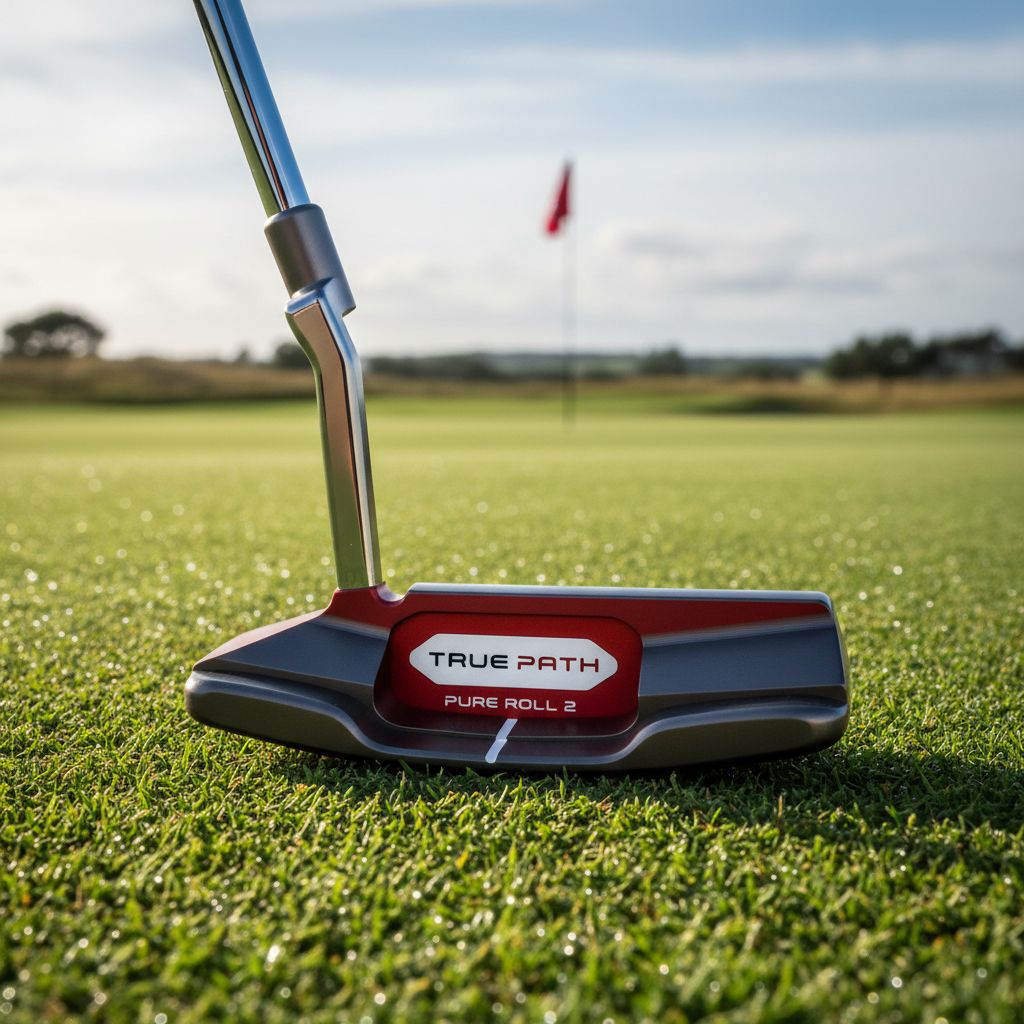
The TaylorMade Spider Tour X models used by these champions often incorporate personal features tailored to their specific needs. For instance, Chris Gotterup’s model features added material on the toe to influence its address position, while Scottie Scheffler’s putter includes an L-neck hosel and True Path with Full Line for enhanced alignment. Interestingly, Collin Morikawa’s winning Spider Tour X was initially built for fellow PGA Tour winner Kurt Kitayama, indicating the versatility and adaptability of this design. The consistent performance of the Spider series positions it as a benchmark for putter performance throughout 2026, with Odyssey and Scotty Cameron models also remaining strong contenders, having accumulated 11 and 13 wins respectively in 2025.
Understanding the Zero-Torque Trend
The golf equipment industry has seen a significant push towards zero-torque putters, a category designed to enhance putting consistency by minimizing the twisting motion of the putter head during a stroke. This twisting, known as torque, can cause the putter face to open or close, leading to off-center hits and inconsistent rolls. Zero-torque putters aim to keep the putter face square through impact, thereby helping to start the ball on its intended line more reliably.
The technology behind these putters typically involves aligning the shaft axis directly over the putter’s center of gravity or employing specialized weighting and hosel designs to resist rotational forces. While the term “zero-torque” is widely used, it is important to note that these putters typically achieve very low torque rather than absolute zero. Companies like L.A.B. Golf have been at the forefront of this innovation, with models such as the DF3, OZ.1i, Mezz. 1, and Link. 1 gaining recognition. Major manufacturers including Bettinardi, PXG, Odyssey, TaylorMade, Scotty Cameron, and Ping have also introduced their own versions of low-torque putters to meet growing consumer interest.
Benefits and Adoption of Zero-Torque Putters
Proponents of zero-torque putters highlight several key advantages. These include improved face stability, leading to a more consistent stroke, enhanced forgiveness on off-center hits, and better alignment feedback. For many golfers, the ability to rely more on a natural pendulum motion without needing to manipulate the face angle through the stroke is a significant draw. PGA Tour professional Michael Kim, who uses a zero-torque putter, attests to their effectiveness in making it “very easy to start putts online,” particularly for putts within eight feet.
The adoption of zero-torque putters on the PGA Tour has been notable, with approximately 10 to 12.5 percent of the field using them in any given week. In 2025, J.J. Spaun secured a significant victory at the U.S. Open with an L.A.B. Golf DF3, a zero-torque model. Lucas Glover also experienced a career resurgence in August 2025, winning back-to-back PGA Tour events with an L.A.B. Mezz. 1 Max. In the retail market, zero-torque putters have seen substantial growth, accounting for roughly 40 percent of off-course big-box retailer sales year-to-date.
Challenges and Diverging Preferences
Despite the technological advancements and growing popularity, zero-torque putters are not universally favored. Some players report a perceived lack of “feel” or tactile feedback, describing the stroke with these putters as feeling “empty”. This feedback is often crucial for golfers with strong kinesthetic awareness, helping them gauge face orientation, strike quality, and release timing. The absence of this feedback can sometimes allow subtle stroke faults to go unnoticed over time.
The recent success of the TaylorMade Spider Tour X, a traditional mallet putter, underscores these diverging preferences among elite golfers. Even players who have experimented with zero-torque designs have, in some cases, reverted to more conventional models. For example, Collin Morikawa, after experimenting with a zero-torque putter in 2025, recently achieved a victory with a non-zero-torque TaylorMade Spider Tour X. This indicates that while zero-torque technology offers clear benefits in stability, many professionals still prioritize the nuanced feedback and familiar performance of traditional designs that require a certain degree of face manipulation. The overall trend suggests that while zero-torque putters make “bad putters better,” they may not necessarily enhance the performance of already “good putters”. Ultimately, putter selection remains a highly personal decision, with a proper fitting being crucial to match a putter’s torque profile with a golfer’s natural stroke.
Frequently Asked Questions (FAQ)
- What is the dominant putter on the PGA Tour that is bucking the zero-torque trend?
- The TaylorMade Spider Tour X putter has been notably dominant in early 2026, securing four victories on the PGA Tour with players like Chris Gotterup, Scottie Scheffler, and Collin Morikawa. This traditional mallet design bucks the zero-torque trend.
- Which players have won with the TaylorMade Spider Tour X putter in early 2026?
- Chris Gotterup won the Sony Open in Hawaii and the WM Phoenix Open, Scottie Scheffler won The American Express, and Collin Morikawa won the AT&T Pebble Beach Pro-Am, all using a TaylorMade Spider Tour X putter.
- What is a zero-torque putter?
- A zero-torque putter is a golf club engineered to minimize the twisting force (torque) of the putter head during the stroke, helping the face stay square to the path with less manipulation.
- What are the benefits of zero-torque putters?
- Benefits include improved face stability, more consistent strokes, forgiveness on off-center hits, and better alignment feedback. They aim to simplify the putting stroke by reducing the need for face manipulation.
- Have any PGA Tour professionals won with zero-torque putters?
- Yes, in 2025, J.J. Spaun won the U.S. Open with an L.A.B. Golf DF3, and Lucas Glover achieved back-to-back PGA Tour victories with an L.A.B. Mezz. 1 Max, both of which are zero-torque models.
- What are some drawbacks of zero-torque putters?
- Some players report a perceived lack of “feel” or tactile feedback during the stroke, which can feel “empty”. This can be a disadvantage for golfers who rely on such feedback for face control and stroke correction.
Key Features: TaylorMade Spider Tour X vs. Zero-Torque Putters
| Feature Category | TaylorMade Spider Tour X (Traditional Mallet) | Zero-Torque Putters (e.g., L.A.B. Golf models) |
|---|---|---|
| Design Philosophy | Emphasis on stability, high Moment of Inertia (MOI), and alignment aids within a traditional mallet shape. Allows for some natural face rotation, providing tactile feedback. | Engineered to virtually eliminate face twisting during the stroke, promoting a naturally square face at impact. Lie Angle Balanced (L.A.B.) technology is common. |
| Putter Face Stability | High stability due to mallet design, but still allows for subtle face manipulation by the golfer. | Exceptional face stability, significantly resists twisting, aiming for a square face return with minimal golfer input. |
| Feel and Feedback | Offers tactile feedback on strike quality and face orientation, which many experienced players value for control and correction. | Can be perceived as having less tactile feedback, sometimes described as feeling “empty” due to minimal torque. Focus is more on line and speed. |
| Forgiveness | High forgiveness typical of mallet designs, particularly on off-center hits, due to perimeter weighting. | High forgiveness, especially on off-center hits, due to resistance to twisting and optimized MOI. |
| PGA Tour Adoption (Early 2026) | Dominant, with four early 2026 PGA Tour victories. | Represents 10-12.5% of the field on any given week. Notable wins in 2025 include J.J. Spaun (U.S. Open) and Lucas Glover. |
| Key Players (Early 2026 Wins) | Chris Gotterup, Scottie Scheffler, Collin Morikawa. | J.J. Spaun, Lucas Glover, Michael Kim. |
Deeper Dive: News & Info About This Topic
Chris Gotterup Claims Victory at 2026 WM Phoenix Open
Chris Gotterup Wins 2026 WM Phoenix Open in Dramatic Playoff
BGT Paradox Putter: A New Era in Zero Torque Technology
Scottie Scheffler Claims 20th PGA Tour Title at The American Express
Scottie Scheffler Dominates at The American Express
Scottie Scheffler Achieves 20th PGA Tour Victory at American Express
Chris Gotterup Triumphs at the 2026 Sony Open in Hawaii
Rory McIlroy Transitions to New Golf Equipment for 2026 Season
TaylorMade Qi4D Driver Impresses Golfers with Performance
TaylorMade Introduces New Qi4D Driver Family Aiming for Speed
