
News Summary
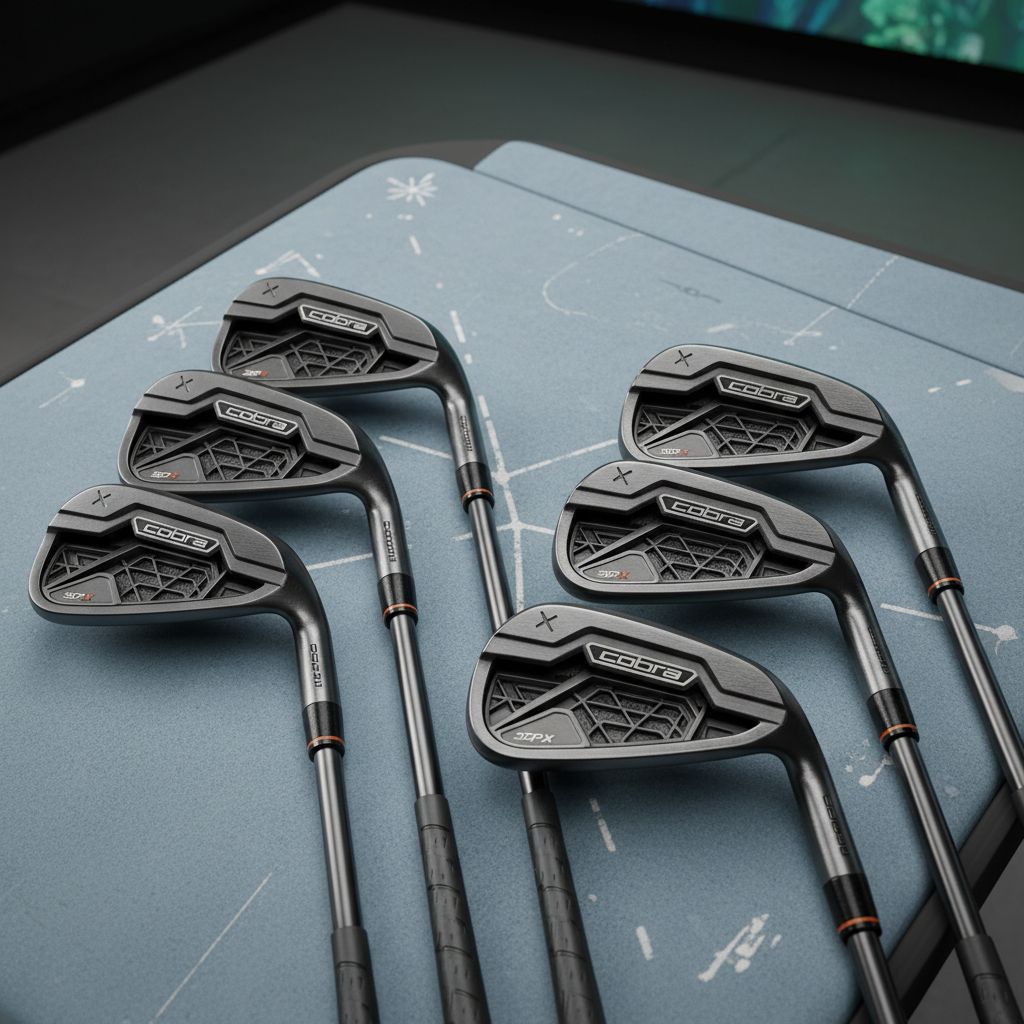
Cobra Golf has unveiled its latest innovations, the 3DP MB and 3DP X irons, showcasing its pioneering use of 3D printing technology in golf equipment. Unlike many competitors who limit 3D printing to prototypes, Cobra leverages this technology for retail products, delivering high-performance clubs designed through advanced manufacturing techniques. The 3DP MB and 3DP X irons not only enhance workability and performance but also exemplify Cobra’s commitment to pushing the boundaries of golf club engineering.
Dearborn, MI – Cobra Golf has once again advanced its innovative use of 3D printing technology in golf equipment, announcing the addition of new 3DP MB and 3DP X irons to its retail offerings. This expansion underscores Cobra’s unique approach within the industry, where 3D printing is typically reserved for prototype development rather than mass-market products.
The introduction of the 3DP MB and 3DP X irons follows the success of Cobra’s existing 3D-printed products, further cementing the company’s position as a pioneer in integrating additive manufacturing into golf club production. Unlike many golf companies that utilize 3D printing solely for testing designs, Cobra has consistently leveraged this technology to create innovative retail products that reach consumers.
A New Era of Iron Design
The latest additions, the 3DP MB and 3DP X irons, represent Cobra’s continued commitment to pushing the boundaries of golf club engineering. While specific performance characteristics for these newest models are anticipated to align with their respective designations—Muscle Back (MB) for workability and X for enhanced performance—they build upon the foundational technology established by the Cobra 3DP Tour irons. These earlier 3DP Tour irons are crafted by fusing 2600 layers of 316 stainless steel powder using powerful lasers, a process that results in a clubhead with precise internal structures and optimized weight distribution. This method allows for complex geometries that are difficult, if not impossible, to achieve with traditional forging or casting methods, ultimately unlocking a new realm of performance.
The Advantage of Additive Manufacturing
Cobra has been at the forefront of bringing 3D printing into the golf world, notably with the introduction of the world’s first 3D-printed steel irons. This manufacturing technique provides significant benefits, including the ability to fine-tune weight placement with unprecedented accuracy. By strategically distributing mass within the clubhead, engineers can optimize factors such as moment of inertia (MOI) for stability and ball speed, and the center of gravity (CG) for launch and spin characteristics. This level of precision contributes to a more forgiving and consistent iron, tailored to the needs of different golfers.
The use of 3D printing also allows for rapid prototyping and iteration, enabling Cobra to bring advanced designs to market more efficiently. This agile development process ensures that the latest technological advancements are quickly integrated into their retail products.
Background on Cobra’s 3D Printing Journey
Cobra’s journey with 3D printing in golf clubs began several years ago, with the company consistently exploring ways to apply this advanced manufacturing process. Past products, such as the Cobra 3DP Tour irons, have been subject to extensive testing by golfers, who have provided feedback on their performance, including spin characteristics and forgiveness. This feedback loop helps Cobra refine its designs and ensure that its 3D-printed offerings meet the high standards expected by golfers.
The company’s dedication to innovation extends beyond specific models, encompassing a broader vision for how technology can improve the game. Cobra’s DS-Adapt iron, for example, has been recognized for its performance in the game improvement category. The consistent pursuit of new manufacturing methods like 3D printing demonstrates Cobra’s ongoing effort to provide golfers with equipment that enhances their play.
Frequently Asked Questions (FAQ)
- What new products has Cobra Golf introduced using 3D printing?
- Cobra Golf has introduced new 3DP MB and 3DP X irons to its 3D-printed offerings.
- How does Cobra Golf use 3D printing differently from other golf companies?
- While most golf companies use 3D printing to test prototypes, Cobra has been using the technology to create innovative retail products.
- What material is used in Cobra’s 3D-printed golf clubs?
- Each clubhead is 3D printed using 2600 layers of 316 stainless steel powder.
- How are the layers of material fused together in Cobra’s 3D printing process?
- The layers of 316 stainless steel powder are fused together using powerful lasers.
- What was Cobra’s prior significant 3D-printed iron offering?
- Cobra previously introduced the 3DP Tour irons, which were among the world’s first 3D-printed steel irons.
Key Features of Cobra’s 3D-Printed Irons
| Feature | Description |
|---|---|
| Models Introduced | 3DP MB irons, 3DP X irons |
| Manufacturing Technology | 3D Printing (Additive Manufacturing) |
| Core Material | 316 stainless steel powder |
| Printing Process | 2600 layers fused together using powerful lasers |
| Industry Approach | Creates innovative retail products (unlike most companies using for prototypes) |
| Key Benefit | Unlocks a new realm of performance through precise internal structures and weight distribution |
| Pioneering Status | Cobra introduced the world’s first 3D-printed steel irons |
Deeper Dive: News & Info About This Topic
Golf World Buzzes with Major Equipment Reveals and Rory McIlroy’s Club Change
Golfers Seek the Softest Wedges on the Market
Tiger Woods’ Driver Evolution Revealed Over 82 PGA Tour Wins
Top Golf Clubs of 2025 Revealed: Expert Reviews and Insights
Modern Iron Design: Stronger Lofts Explained
Insights from Golf Equipment Testing Facility Reveal Key Findings
Cobra DS-ADAPT vs Ping G440 Hybrid: A Comprehensive Comparison
Top Equipment Stories on GolfWRX in 2025 Revealed
Dubai Golf Equipment Market to Expand Gradually
Golf Equipment Trends: Classic Looks vs. New Tech
