
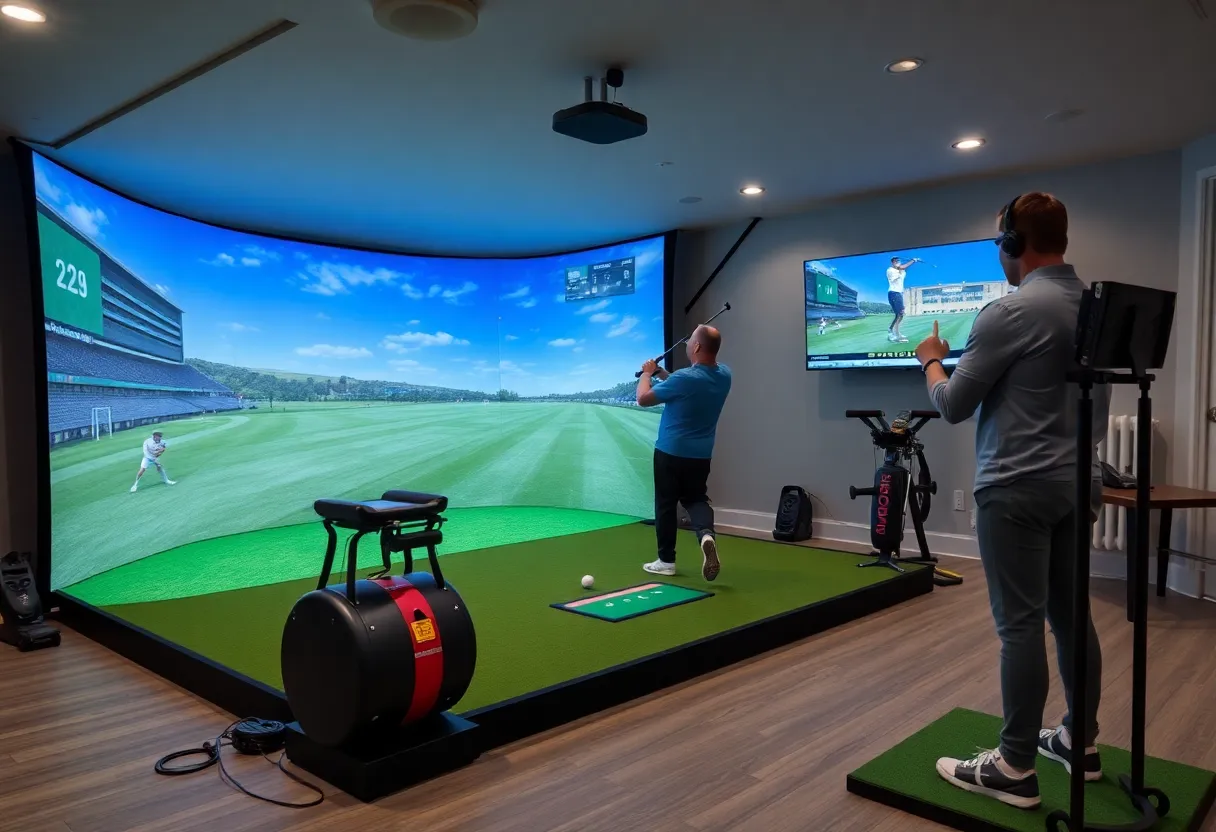
Golf Simulators with Other Sports: Multi-Use Options
Golf simulators have revolutionized the way enthusiasts and beginners alike engage with the sport. However, advancements in technology have led to innovations that extend beyond golf. Golf simulators with other sports offer a multifaceted approach to training and entertainment. This article explores the integration of various sports into golf simulators, detailing the benefits, popular sports combinations, and technology involved.
Understanding Golf Simulators
A golf simulator is an advanced system designed to mimic the experience of playing golf. It combines hardware, such as sensors and screens, and software that tracks performance data. The most sophisticated simulators can replicate various golf courses, provide instant feedback, and analyze swings.
How Golf Simulators Work
Typically, a golf simulator employs several components:
- Launch Monitors: These devices measure the ball and club’s data, including speed, angle, and spin.
- Projectors and Screens: They display realistic graphics, enhancing the immersive experience.
- Software: This allows users to access different courses and analyze their performance.
With the integration of other sports, golf simulators utilize similar technology to create varied sports experiences.
Multi-Use Sports Simulators
The evolution of golf simulators has led to the rise of multi-sport simulators, catering to various athletic preferences. This versatility allows users to engage in several sports without requiring multiple devices.
Popular Sports That Can be Integrated
Golf simulators can incorporate various sports through software updates and hardware adaptations. Here are some popular options:
1. Baseball
Many golf simulators now feature baseball training modules. Batting practice scenarios allow users to improve their swing mechanics. Data similar to golf statistics, like exit velocity and launch angle, provides detailed feedback.
2. Football
Football training experiences often focus on throwing accuracy. Golf simulator technology enables users to throw a football at targets displayed on the screen, improving aim and velocity.
3. Soccer
Soccer simulations allow users to practice shooting and passing. Users can work on shot precision and technique, providing a comprehensive training experience reminiscent of an actual soccer field.
4. Tennis
Some advanced systems offer tennis simulations. Users can practice different strokes, including serves and volleys, enhancing their overall game. Players receive distance and angle information about their shots, helping refine overall mechanics.
5. Bowling
Bowling is also making its way into the realm of golf simulators. By incorporating bowling lanes, users can practice their techniques and improve their game while also enjoying a different sporting experience.
Benefits of Multi-Use Simulation
Integrating multiple sports into golf simulators offers several advantages:
- Diverse Training: Athletes can diversify their training routines, enhancing overall athleticism.
- Space Efficiency: A multi-use simulator occupies less space than multiple specialized machines.
- Cost-Effective: Investing in one simulator offers access to numerous sports, creating value for users.
- Entertainment: Family and friends can engage together in various sports, making the experience social and fun.
Technology Behind Multi-Sport Simulators
The ability to switch between sports is largely due to advancements in sensor technology and software integration. High-speed cameras, motion sensors, and advanced algorithms are crucial in ensuring accuracy across different sports.
Sensor Technology
Different sensors measure various aspects of movement. For example, launch monitors can capture data for both golf balls and baseballs due to similarity in flight dynamics. This same technology processes football throws and soccer kicks effectively, allowing users to transition seamlessly between sports.
Software Developments
Software plays a critical role in multi-sport functionality. Developers create programs that simulate different environments and ensure user-friendly interfaces, allowing users to easily switch between sports. With continuous software updates, new features and sports can be added, keeping the experience fresh and engaging.
Current Market Trends
The market for multi-use golf simulators is experiencing significant growth. Consumers are increasingly seeking versatile options that accommodate their diverse interests in sports. Some notable trends include:
Increased Consumer Demand
As families look for more recreational options at home, the demand for golf simulators that feature multiple sports is increasing. These devices are becoming popular choices for home gyms and entertainment spaces.
Enhanced Connectivity
Modern simulators are equipped with connectivity features that allow users to compete with players globally. Online leagues and competitions are becoming commonplace, fostering a community of sports enthusiasts.
Personalization Features
Customization options enhance user experience. Recent models allow users to tailor settings according to their skill levels, preferred sports, and training goals.
Conclusion
Golf simulators are no longer limited to just golf. With the integration of other sports, enthusiasts can enjoy a variety of athletic experiences. Golf simulators with other sports present a compelling solution for those seeking a versatile training tool or an engaging recreational activity. As technology continues to advance, the potential for enhanced multi-sport functionality will only grow, offering users an expansive world of possibilities in their athletic pursuits.
